
RiskBlocs
The Destination for Capital Relief Trades
RiskBlocs is a digital platform designed to streamline and modernise capital risk transfer transactions for banks and financial institutions. The platform digitises complex regulatory workflows, transforming traditionally private and non-tradeable capital risk transfers into accessible and tradeable financial instruments.
My Responsibilities
- UX strategy and user flows
- Journey mapping and information architecture
- Wireframing and prototyping
- Desktop platform UX design
- Interaction design
- Dashboard and trading workflows
- Design system creation
- Cross-role experience consistency
- Developer and stakeholder collaboration
Deliverables
Finance & Digital Asset Trading
Industry
2025
Year
Desktop Trading Platform
Type of Work
A scalable platform that simplified highly complex financial workflows while maintaining transparency, efficiency, and regulatory alignment — transforming traditionally private capital risk transfers into accessible, tradeable financial instruments.
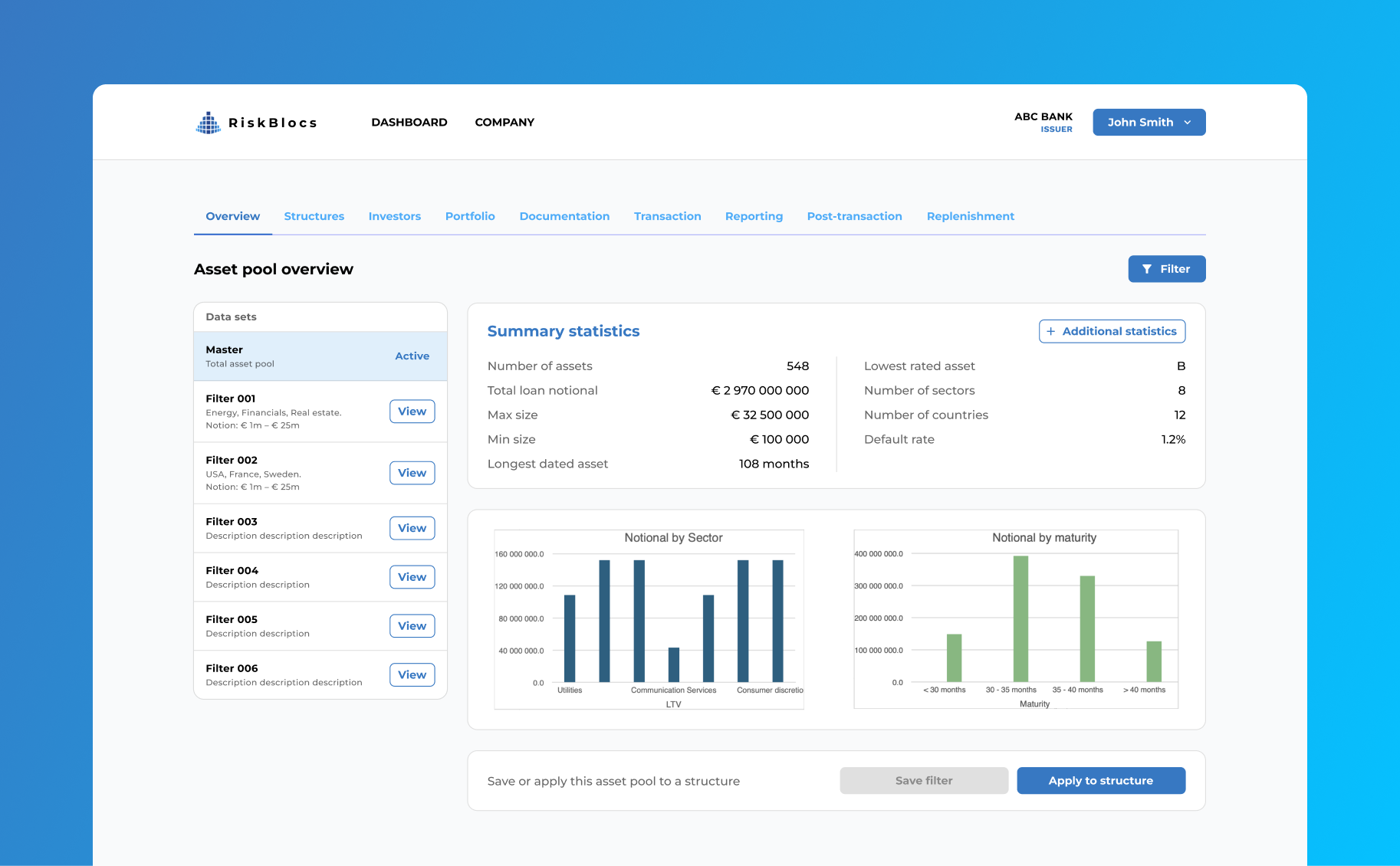
// Overview
RiskBlocs is a digital platform designed to streamline and modernise capital risk transfer transactions for banks and financial institutions. The platform digitises complex regulatory workflows, transforming traditionally private and non-tradeable capital risk transfers into accessible and tradeable financial instruments.
My role focused on designing the end-to-end user experience for a desktop platform serving three core user groups — issuers, investors, and platform administrators. The goal was creating a scalable platform that simplified highly complex financial workflows while maintaining transparency, efficiency, and regulatory alignment.
// The Challenge
Simplifying Sophisticated Financial Workflows
Capital risk transfer transactions are traditionally slow, fragmented, and operationally complex. The challenge was designing a platform capable of simplifying sophisticated financial processes into intuitive workflows that supported multiple user roles with different objectives and permissions.
Transaction creation and distribution
Issuers needed a structured workflow to create, structure, and distribute capital relief transactions while maintaining regulatory alignment and operational efficiency.
Capital relief trade management
The platform needed to support the full lifecycle of trade management — from structuring to settlement — in a single cohesive interface.
Investor participation workflows
Investors required clear pathways to review, evaluate, and participate in opportunities without being overwhelmed by complex financial data.
Regulatory-aligned processes
Every workflow needed to align with financial regulations, ensuring compliance was built into the interface rather than an afterthought.
Data visibility and transparency
The platform needed to communicate large volumes of financial data without overwhelming users, presenting information through clear hierarchy and progressive disclosure.
Multi-role access and permissions
Issuers, investors, and administrators each needed different views, permissions, and workflows within a single platform experience.
Platform Experience
The desktop platform was designed to support issuers, investors, and administrators across the lifecycle of capital relief transactions. The UX focused on simplifying complex financial workflows through structured interfaces and clear information hierarchy.
Key Features
Core Flows
- Create and structure transactions
- Review deal information
- Access portfolio and trade data
- Participate in investment opportunities
- Track transaction activity
- Manage users and permissions
- Monitor operational workflows
Interface Principles
The interface used modular dashboard layouts, table-based financial data organisation, clear status indicators, action-oriented workflows, progressive disclosure for detailed data, consistent navigation patterns, and structured filtering and sorting systems.
Financial data is inherently dense and overwhelming when presented poorly. The RiskBlocs platform broke this down through modular dashboards that let users focus on what matters to their role. Status indicators replaced verbose status descriptions. Tables with smart filtering allowed fast drill-down into specific deals. Progressive disclosure kept advanced financial details one click away — accessible when needed, invisible when not. The result was a platform that felt organised rather than cluttered, empowering users to act quickly on large volumes of data.
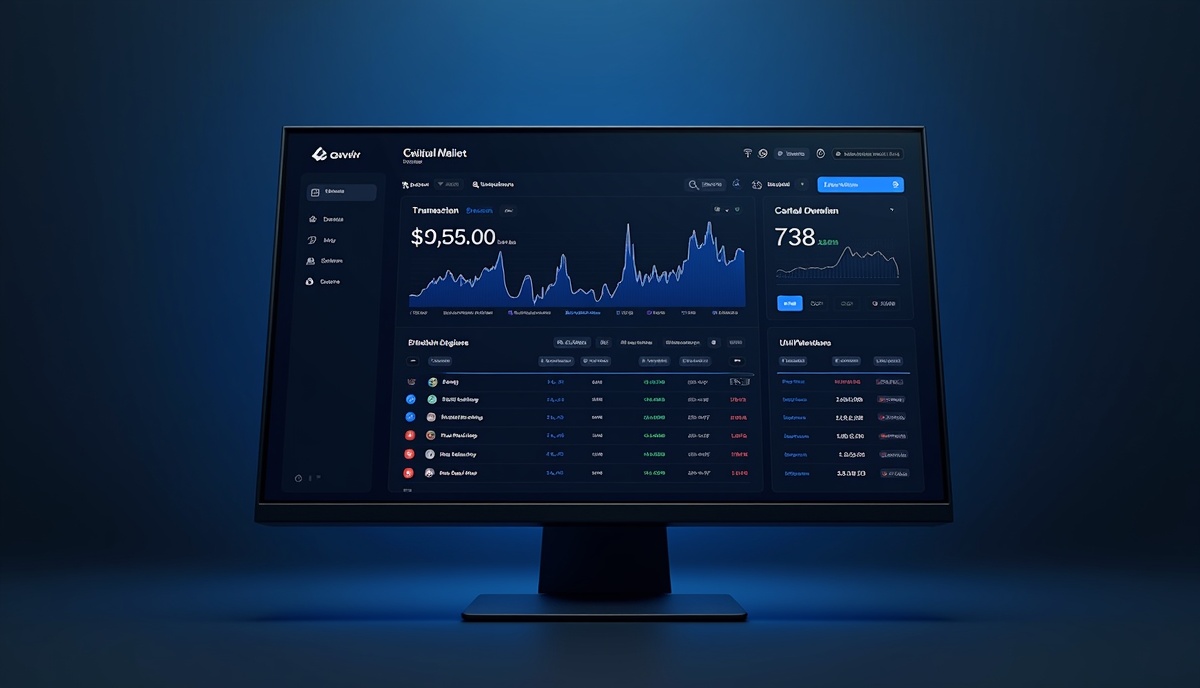
Desktop Trading Platform — Transaction Dashboard & Deal Overview
RiskBlocsMulti-Persona Experience
A major focus of the project was designing a single platform experience that supported different user roles without increasing complexity. The experience was tailored for issuers managing transaction creation and distribution, investors reviewing and participating in opportunities, and administrators overseeing platform operations and permissions.
Role-Specific Focus
UX Priorities
- Clarity — every action and status is immediately understandable
- Efficiency — workflows are optimised for role-specific tasks
- Data readability — financial information is scannable and digestible
- Reduced cognitive load — no unnecessary complexity exposed to any role
- Fast access — important information is always within reach
Design Approach
This approach allowed each persona to focus on the information and actions most relevant to their responsibilities while maintaining consistency across the platform. Role-based navigation adapted the sidebar and top-level menus. Dashboard widgets were configurable per role. Permissions controlled visibility of sensitive financial data and administrative tools.
Issuers saw creation tools and distribution pipelines. Investors saw deal listings, opportunity metrics, and participation forms. Administrators saw user management, permission controls, and operational oversight panels. Yet the visual language, interaction patterns, and navigation structure remained identical. This consistency reduced training time and made collaboration across roles smoother — everyone spoke the same interface language, even when focusing on different tasks.
Issuer View — Deal Creation & Structuring
Investor View — Participation & Portfolio
// Outcome
Measurable Results
The final platform delivered a modern and structured experience for managing capital relief trades digitally — supporting issuers, investors, and administrators within a single ecosystem.
Simplified
transaction workflows across all user roles
Improved
visibility into financial data and deal information
Clearer
multi-role platform experiences with role-specific views
Reduced
operational complexity through structured digital workflows
Improved
efficiency across transaction management and tracking
A scalable
and consistent enterprise design system
// Reflection
This project demonstrated how UX design can simplify highly technical financial systems through structured and intuitive digital experiences.
By focusing on clarity, workflow efficiency, and information hierarchy, the platform transformed complex capital risk transfer processes into accessible tools that supported issuers, investors, and administrators within a single ecosystem. The key insight from RiskBlocs was that in enterprise finance, design is not about making things beautiful — it is about making complexity manageable. Every table, every status badge, every filtered view was a decision to reduce the mental load of handling millions in transactions. When users can trust the interface to surface the right data at the right time, they can focus on what they do best: making informed financial decisions.